
High above Earth, thin veils of metallic haze drift through the edge of space. Known as sporadic E layers, these high-altitude “clouds” form from the vaporized dust of burnt-up meteors, earning their name from the unpredictable way they emerge and then dissipate. Now, new results from a NASA sounding rocket — a suborbital research rocket […]

At the center of our solar system, the Sun influences every planet that orbits it. In two recent NASA-funded studies, scientists uncovered how ancient events in the Sun’s history may have helped create Earth’s unique climate and driven previously unexplained climatic shifts. In new research, scientists at NASA’s SHIELD (Solar Wind with Hydrogen Ion charge Exchange and Large-Scale Dynamics) center — one of […]

On Aug. 12, a total solar eclipse darkened skies over Greenland, Iceland, and Spain. As the Moon covered the Sun, it briefly revealed the Sun’s wispy outer atmosphere — the corona — to those in the path of totality who were lucky enough to have clear skies. NASA researchers and photographers were along the eclipse […]

As humanity looks to the Moon and stars for future exploration, predicting space weather — conditions in space primarily driven by the Sun — is more important than ever. Now, a team of astrophysicists and data scientists with NASA’s COFFIES (Consequence Of Fields and Flows in the Interior and Exterior of the Sun) has developed a […]
Using continuous imagery from NASA’s PUNCH (Polarimeter to Unify the Corona and Heliosphere) mission, scientists predicted the near-Earth arrival of a solar eruption to within 30 minutes in an initial proof of concept test. The results, presented Tuesday at the Committee on Space Research Scientific Meeting and under review at the journal Space Weather, could […]

Each time the Moon covers the Sun during a total solar eclipse — darkening daytime skies and briefly revealing the Sun’s ethereal outer atmosphere, the corona — it presents new opportunities to better understand our star and its influence on Earth. On Wednesday, Aug. 12, as the next total solar eclipse sweeps over Greenland, Iceland, […]
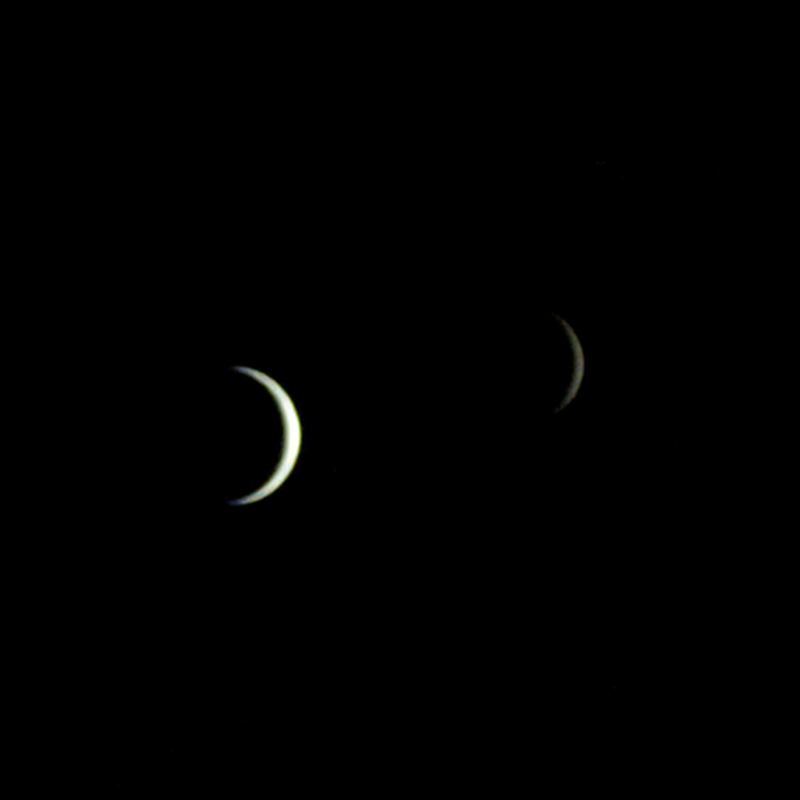
On July 3, one of NASA’s two Mars-destined ESCAPADE (Escape and Plasma Acceleration and Dynamics Explorers) spacecraft captured photos of Earth and the Moon in visible and thermal infrared light. At the time, the spacecraft was 363,250 miles (584,600 kilometers) from Earth and 115,600 miles (186,100 kilometers) from the Moon, making the Moon appear relatively […]
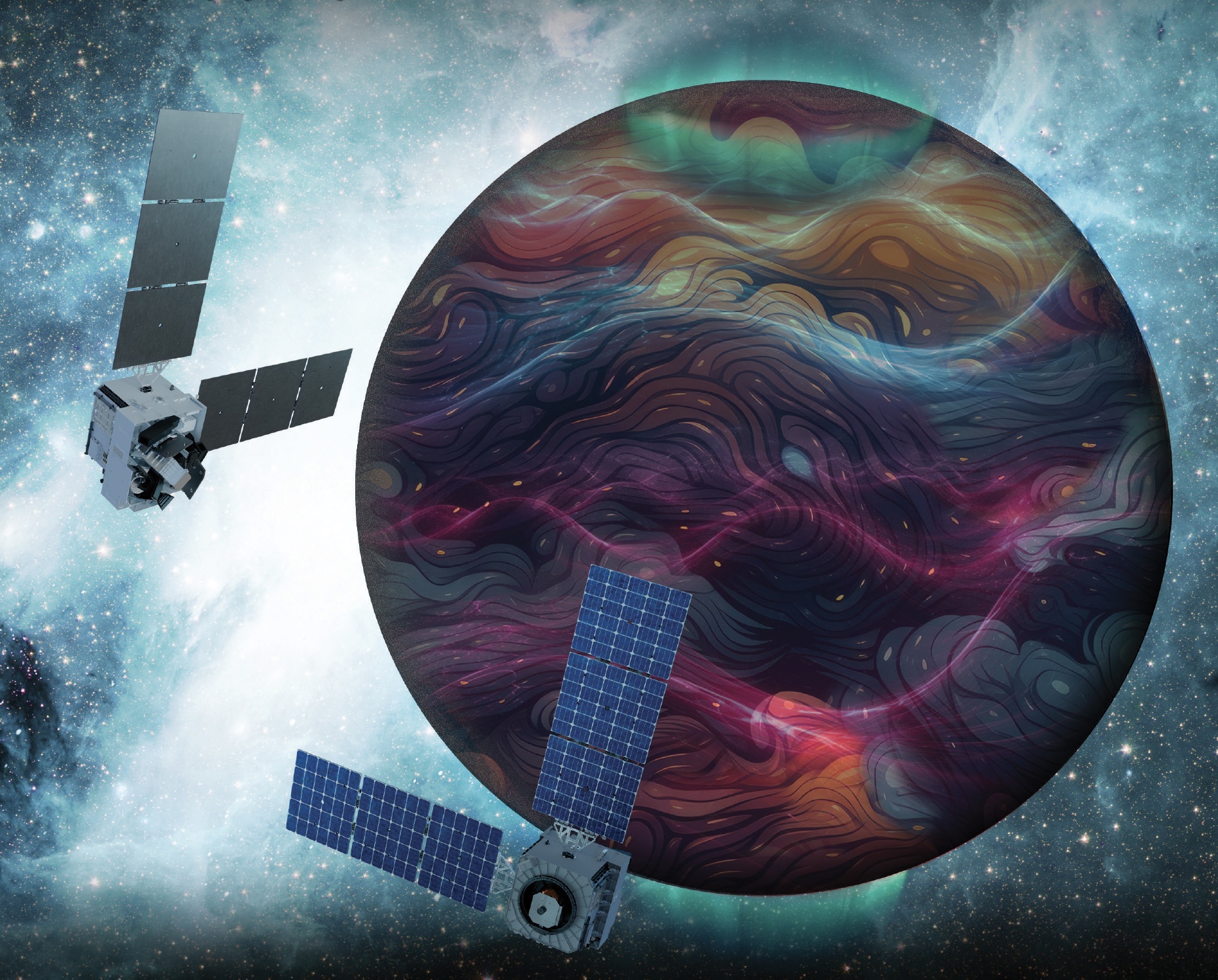
NASA selected a mission concept to research how space weather and dynamics within Earth’s atmosphere influence the space environment and help improve prediction capabilities for impacts on crucial technology, such as GPS and low Earth orbit satellites, as well as astronauts in space. The DAPHNE (Dynamic Atmosphere-Ionosphere Explorer) mission will enter Phase B of development, […]

In early May 2026, NASA employees, contractors, and volunteers helped to bring Heliophysics to girls of all ages in a fun-filled weekend of hands-on science activities and experiments.

On May 21, ground controllers powered down NASA’s AWE (Atmospheric Waves Experiment) instrument, bringing the data collection phase of the mission to a successful and scheduled end, surpassing its planned two-year mission. Installed on the exterior of the International Space Station since November 2023, AWE studied atmospheric gravity waves, which are giant ripples in the […]