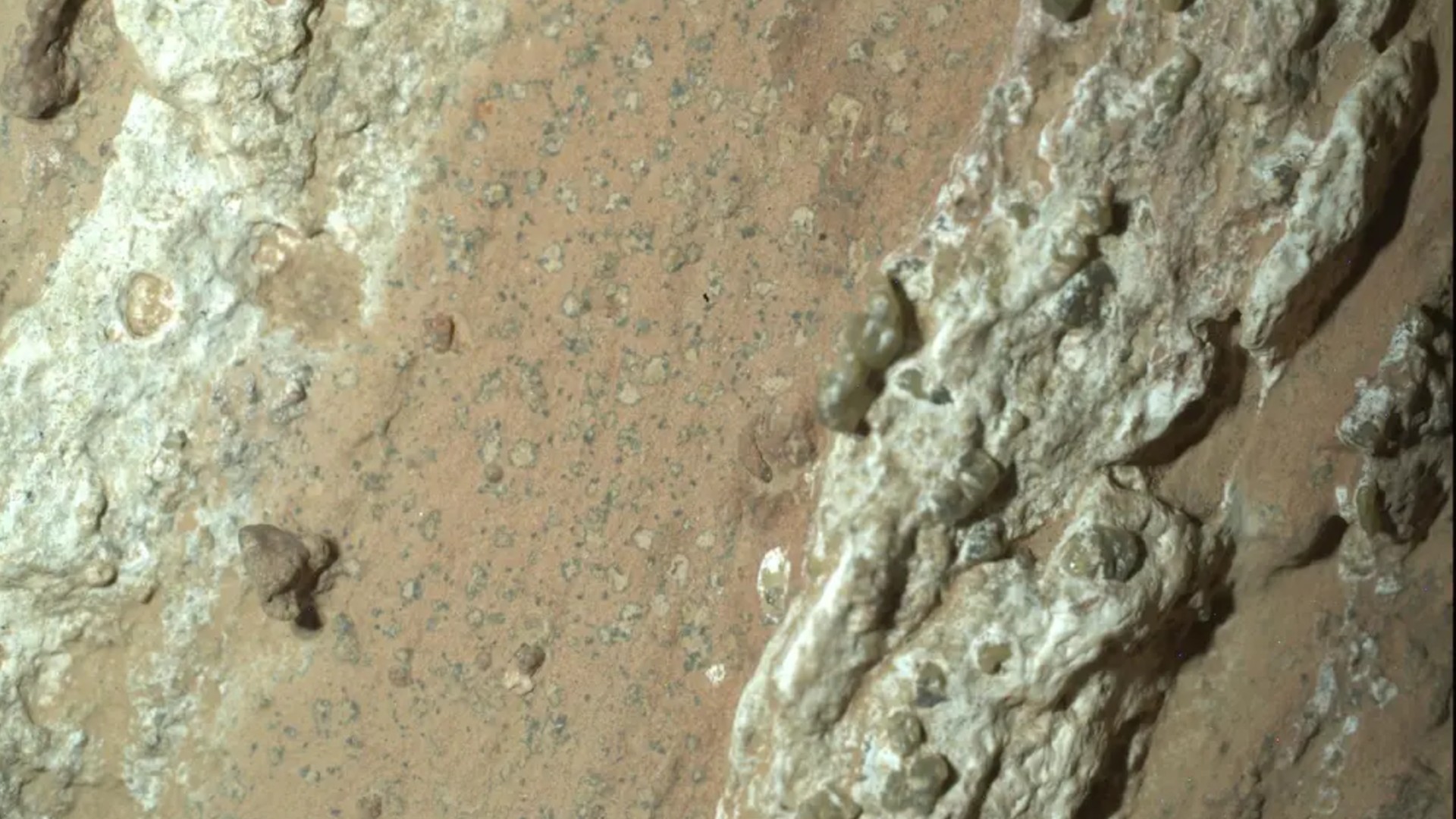
“Measurements of two mudstones show hundreds of organic detections, making this the most robust organic detection in Jezero crater.”
Scientists have drawn up a research blueprint for assessing the viability of warming the Red Planet, outlining what it might take to make Mars a place in space where Earth life can thrive.
…
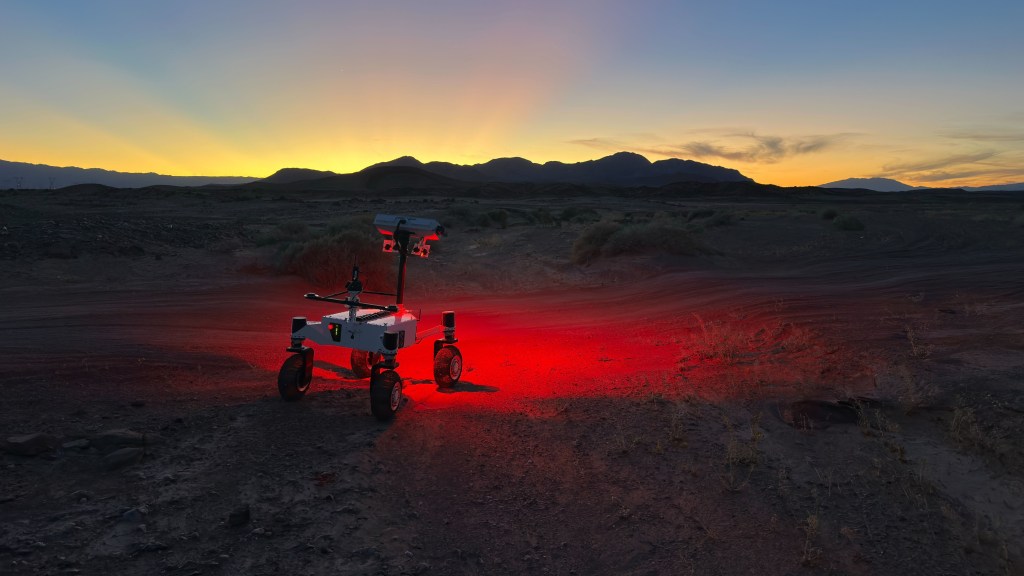
On a bleak stretch of the Colorado Desert in Southern California, a compact four-wheeled rover recently trundled about 16 miles (26 kilometers) with minimal intervention from the team of engineers trailing it. Called ERNEST (Exploration Rover for Navigating Extreme Sloped Terrain), this prototype is being used by NASA to advance both robotic autonomy and the […]
Percy has now traveled more than 26.2 miles on the Red Planet! Could you?
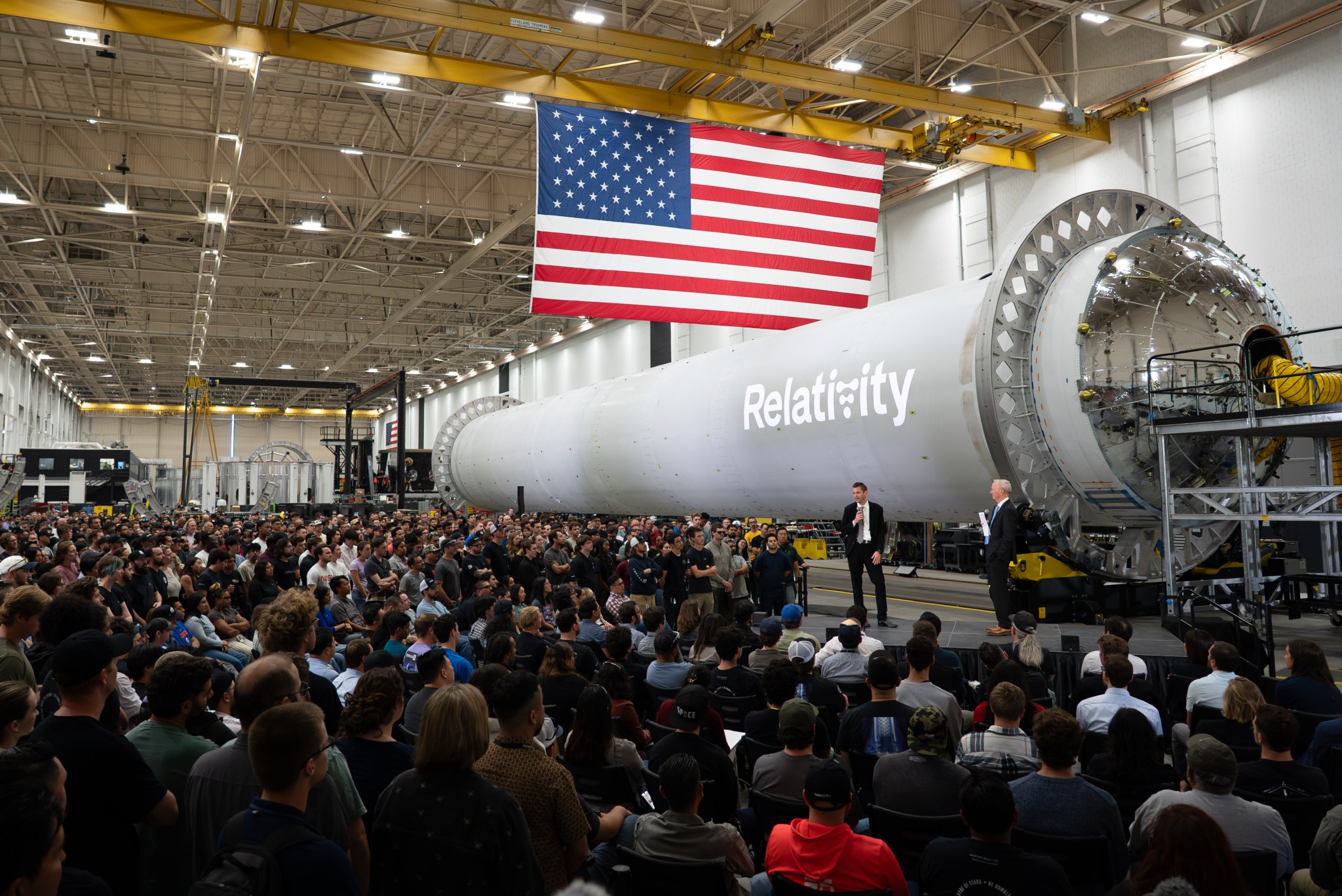
NASA Wednesday announced a new public‑private partnership to advance Mars science by combining the agency’s scientific leadership with commercial innovation. Under this model, NASA will provide the Aeolus atmospheric‑science instrument payload suite, while Relativity Space supplies the spacecraft, rocket, and cruise operations necessary to deliver the instruments to Mars. This partnership reflects NASA’s growing commitment […]
NASA’s MAVEN Mars mission ended after 11 years, having revealed how the planet lost its atmosphere and served as a key communications relay for surface missions.
…
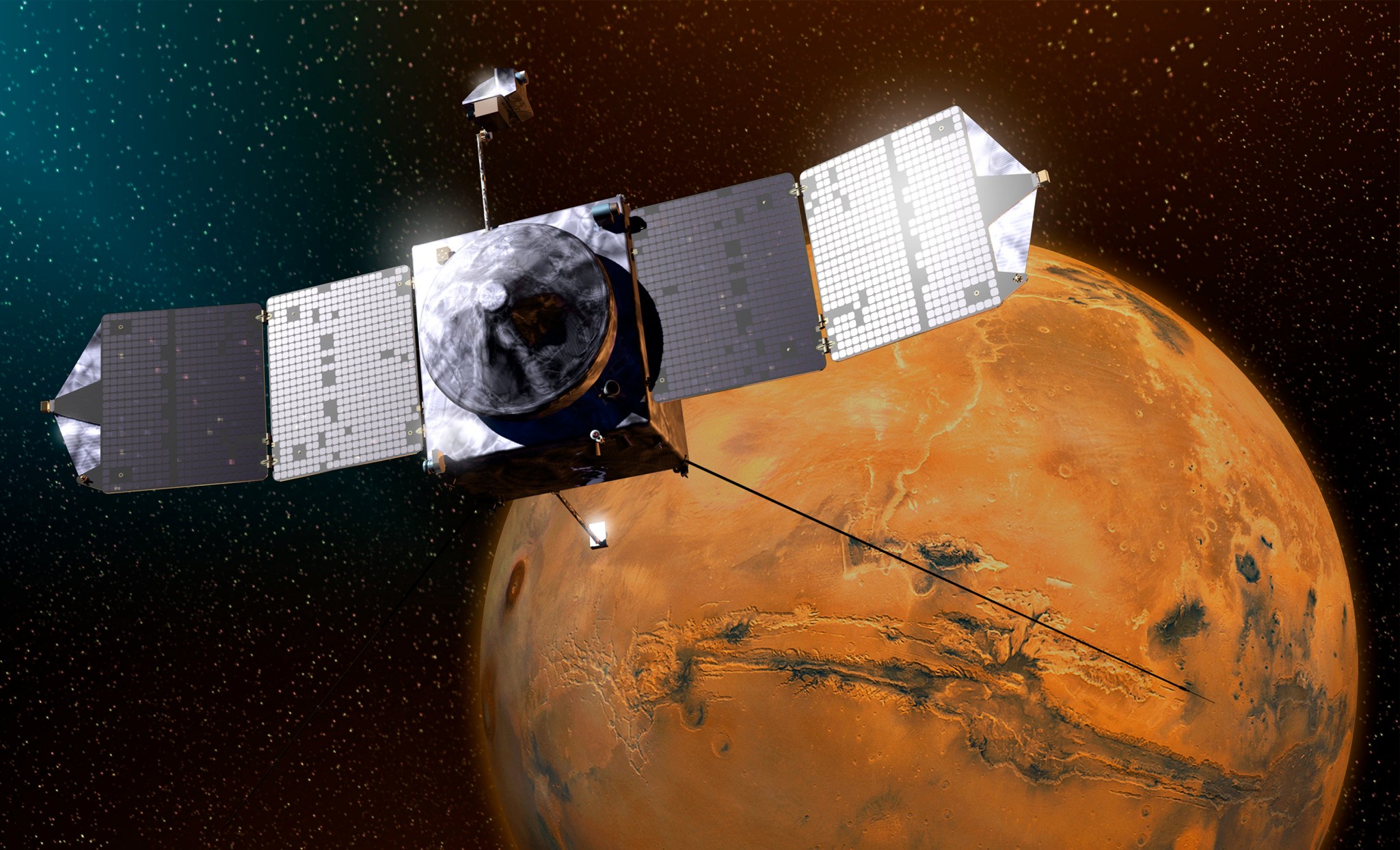
The first mission devoted to observing the Martian atmosphere and its evolution, NASA’s MAVEN (Mars Atmosphere and Volatile Evolution), has ended after more than 11 years in orbit at Mars and a decade beyond its primary, one-year mission. The spacecraft was heard last on Dec. 6, when it experienced an unexpected loss of signal after […]

Scientists analyzed 20 Martian samples collected by NASA’s Curiosity Rover and found that differences in hematite crystallite size at varying elevations could serve as a new mineralogical marker for understanding Mars’ ancient climate.
Data from NASA’s MAVEN spacecraft revealed a never-before-seen atmospheric effect on Mars, revealing how solar storms may shape planets without strong magnetic fields.
…
Engineers are increasingly turning to the concept of “biomimicry” for the next generation of Mars robots.