
Emissions on both sides of the island are unusually high as human-set fires spread in a landscape parched by drought.

The powerful low-pressure system formed over the North Atlantic out of the remnants of Hurricane Isaias.

Though it remained offshore, the storm lashed coastal areas with high winds and flooding—and produced remarkable rippling patterns in the upper atmosphere.

Hurricanes Polo and Nolo sent destructive effects ashore amid an active season in the northeastern and central Pacific.

A powerful eruption from the Indonesian volcano lofted ash into the atmosphere, disrupting thousands of flights and degrading air quality.
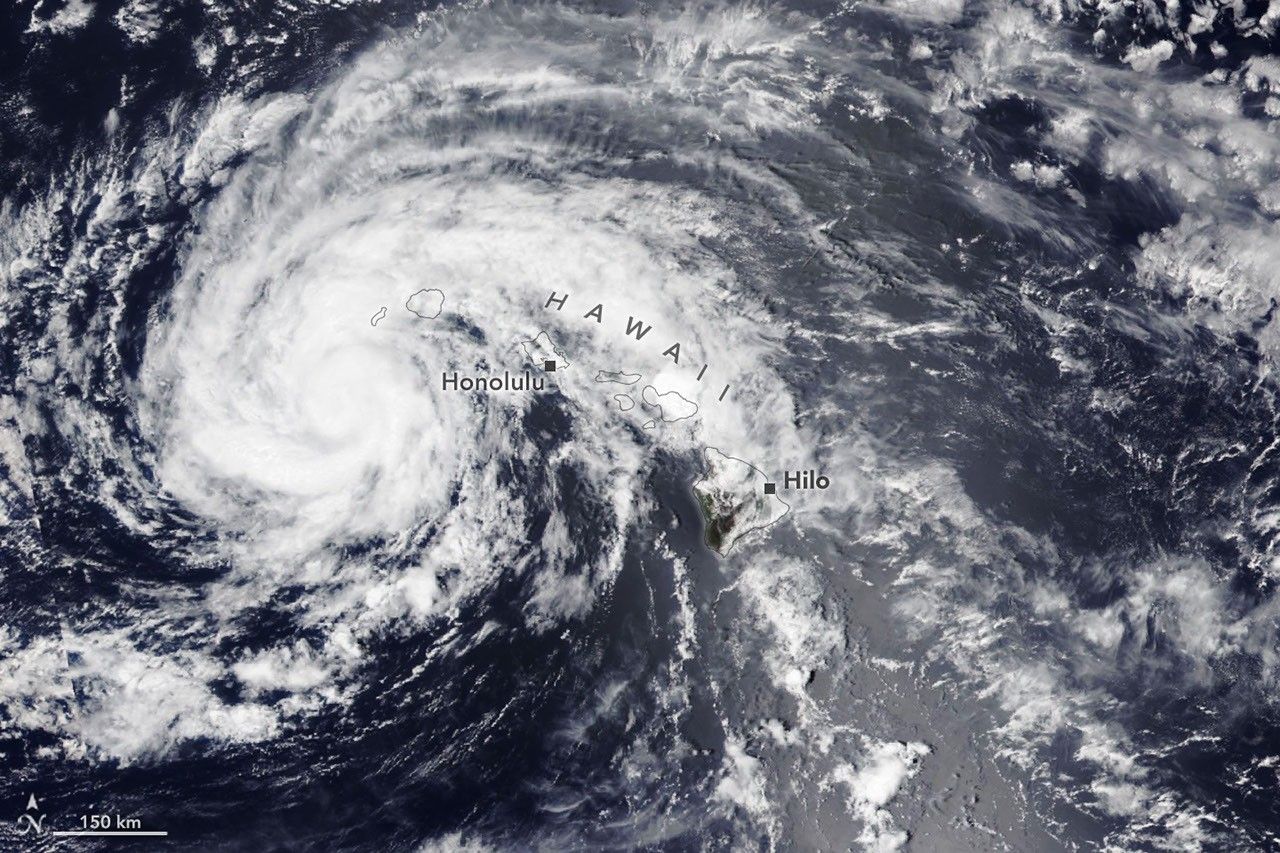
The powerful storm delivered extreme rainfall and damaging winds to the state, passing the Island of Hawaiʻi as a category 1 hurricane.

Canadian wildfires sent plumes of smoke streaming over Ontario, Quebec, and parts of the U.S. Midwest and Northeast.

The third category 5 tropical cyclone of 2026 crossed the U.S. Northern Mariana Islands and Guam before continuing toward Asia.

Satellites observed striking upper-atmosphere phenomena generated by an intensifying tropical cyclone.

A recent analysis revealed where artificial light at night has intensified, as well as where it has diminished.