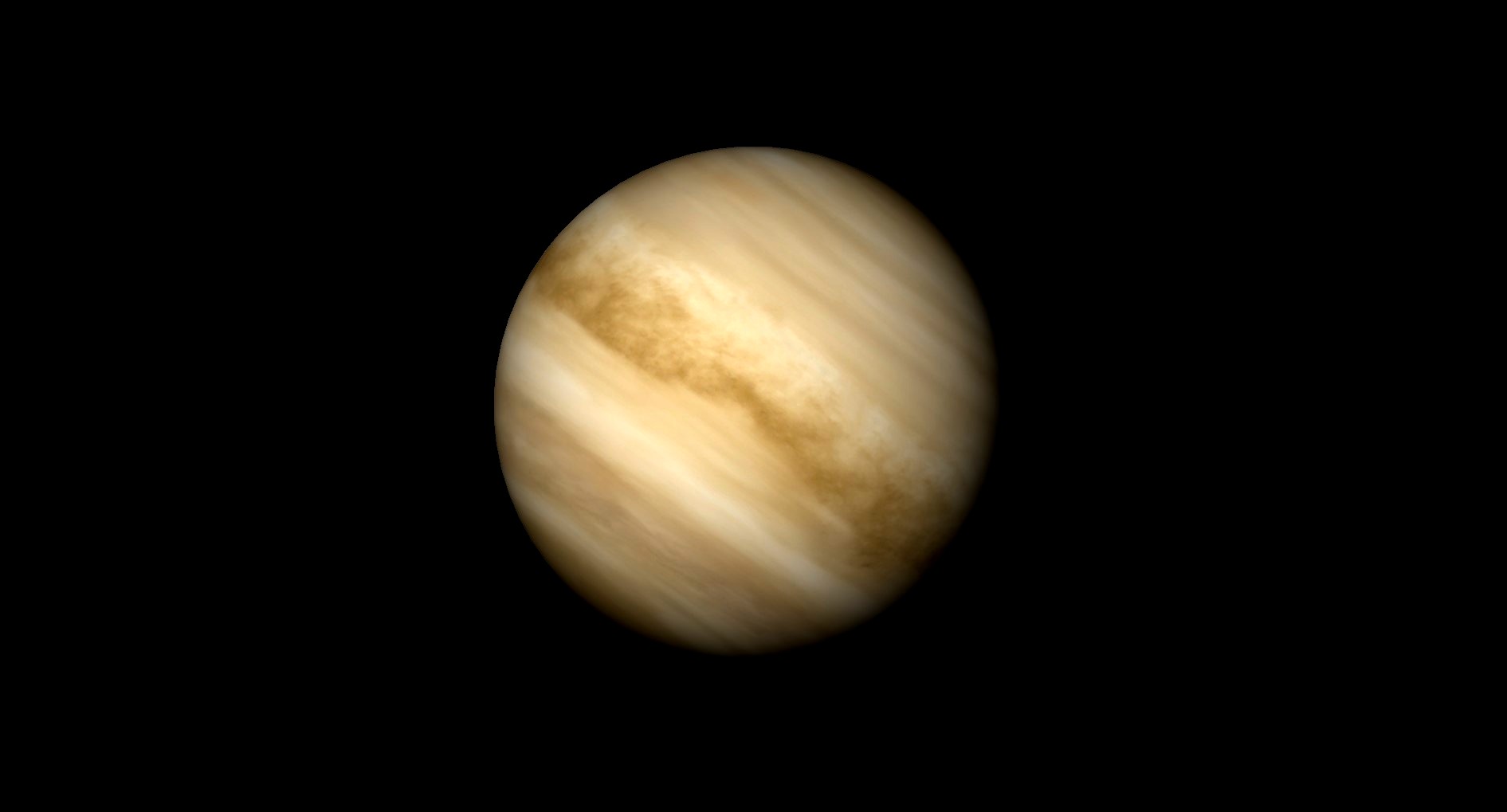
Scientists may finally know why Venus, Earth’s twin, lacks a moon, finding that the hottest planet in the solar system may have consumed its own natural satellite.
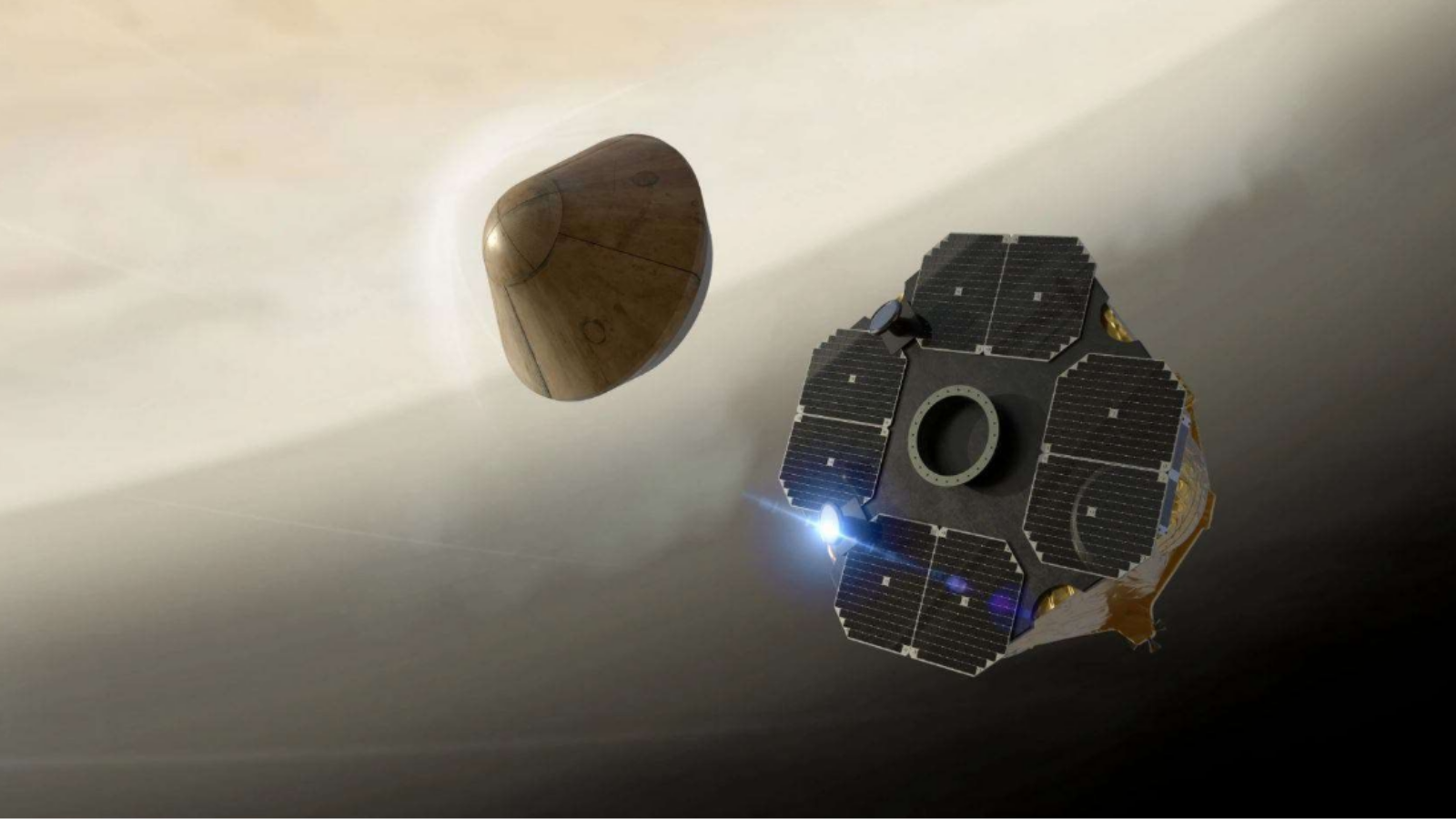
The first-ever private mission to Venus is still groundbound due to delays with its launch vehicle, Rocket Lab’s Neutron. But team members remain bullish on the groundbreaking mission.

Brilliant Venus and a Harvest Moon Use the Moon to find Antares and the Teapot, spot brilliant Venus, welcome the equinox, and see the Harvest Moon near Saturn and Neptune. Skywatching Highlights Transcript The Moon joins a tea party… Venus cranks up the brightness… the seasons officially change… and the Harvest Moon meets up with […]

A solar eclipse, the Perseids, bright Venus after sunset, and a deep partial lunar eclipse highlight August’s skywatching. Skywatching Highlights Transcript A solar eclipse, one of the year’s best meteor showers, Venus at its brightest in the evening sky, and a lunar eclipse to close out the month. That’s “What’s Up” for August. On Aug. […]

The Northwest Earth and Space Science Pathways (NESSP) project recently concluded its 2025–2026 ROADS (Rover Observation And Discoveries in Space) from Earth to Venus National Challenge, a NASA Science Activation program student challenge that engaged more than 500 students on 120 teams from eight states in authentic science and engineering experiences inspired by Venus exploration. […]
A 3,700-mile-long cloud bank on Venus forms through the same phenomenon that describes how water spreads out in your kitchen sink, scientists say.
…
Evidence suggests that Venus is still volcanically active, and new data about a big eruption in Hawaii a few years ago could help scientists find out for sure.
…
Russia plans to launch the Venera-D mission to Venus in 2036, continuing the Soviet Union’s legacy of exploring there in the 1960s, 1970s and 1980s.
…
Scientists analyzing decades-old NASA’s Magellan data have identified only the second reported lava tube on Venus.
This coming July, Venus could plow through the dust generated by an asteroid breakup thousands of years ago, potentially sparking an impressive meteor shower.
…